

Introduction: Your Employees Are Working Harder. But Are They Working Smarter?
The modern workplace is changing faster than ever. Teams are handling more projects, managing multiple communication channels, and adapting to constantly evolving business requirements. Yet, many organizations still struggle with one important question — where is productivity being lost?
Employees may spend long hours working, but without the right insights, businesses cannot understand how time, resources, and workflows are actually being utilized.
This is where AI workplace intelligence is creating a major shift.
In 2026, businesses are moving beyond traditional productivity tracking methods and adopting intelligent systems that can analyze work patterns, automate repetitive activities, provide actionable insights, and improve overall efficiency.
Artificial Intelligence is no longer limited to chatbots or automation tools. It is becoming a strategic business capability that helps organizations make smarter decisions, improve employee experiences, and build more efficient operations.
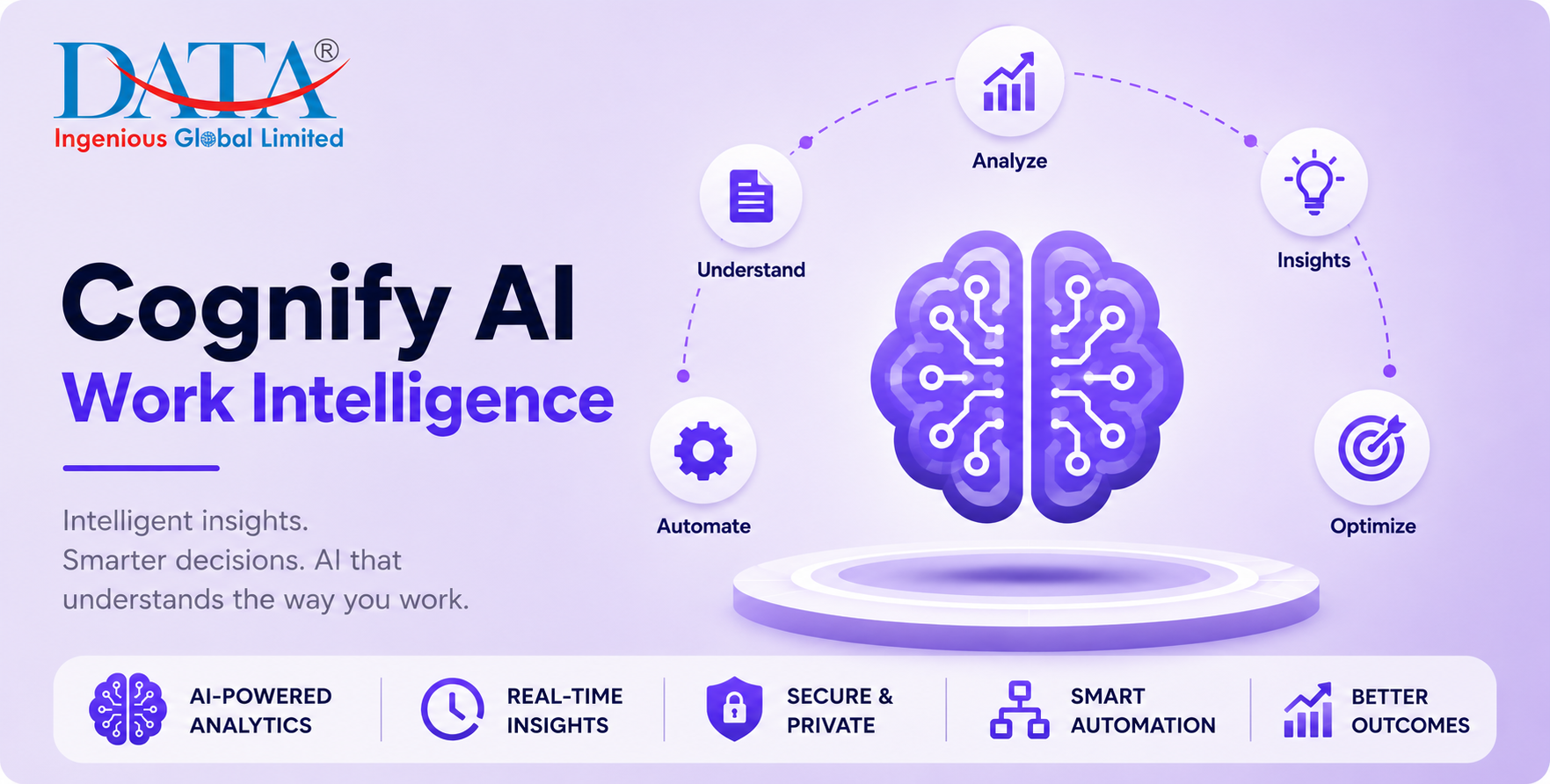
Solutions like Cognify AI Work Intelligence are helping businesses understand how work happens, identify productivity opportunities, and create a future-ready workplace powered by data and intelligence.
What is AI Workplace Intelligence?
AI workplace intelligence refers to the use of Artificial Intelligence technologies to analyze workplace activities, understand employee workflows, optimize processes, and provide meaningful insights that improve business performance.
Unlike traditional workplace monitoring systems that focus only on tracking activities, AI workplace intelligence focuses on understanding patterns and recommending improvements.
It combines technologies such as:
- Artificial Intelligence
- Machine Learning
- Data Analytics
- Automation
- Natural Language Processing
to help organizations understand:
- How teams collaborate
- Which processes consume unnecessary time
- Where operational improvements are required
- How resources can be optimized
- What factors influence productivity
The goal is not simply to measure work but to make work smarter.
With AI-powered workplace intelligence, businesses can transform raw workplace data into valuable insights that support better decisions.
How AI Workplace Intelligence Works
AI workplace intelligence works by collecting and analyzing workplace data from different business activities and converting it into actionable insights.
For example, an organization may have multiple teams working across different projects, communication platforms, and business applications. AI systems can analyze these patterns to identify workflow trends and productivity opportunities.
The process generally involves three major steps:
Data Collection and Analysis
AI systems collect information from workplace activities, applications, workflows, and collaboration platforms.
This data helps understand how employees interact with tools, complete tasks, and manage their responsibilities.
Identifying Productivity Patterns
AI algorithms analyze collected information to identify patterns such as:
- Time-consuming processes
- Workflow bottlenecks
- Communication gaps
- Resource utilization challenges
These insights help businesses understand where improvements can be made.
Providing Intelligent Recommendations
The biggest advantage of AI workplace intelligence is that it does not just show data; it provides meaningful recommendations.
Businesses can use these insights to automate repetitive tasks, improve workflows, and create better strategies for employee productivity.
Why Businesses Need AI Workplace Intelligence in 2026
The workplace of 2026 is more digital, distributed, and technology-driven than ever before.
Remote work, hybrid teams, increasing customer expectations, and growing competition have made productivity management more complex.
Traditional methods of managing productivity are no longer enough.
Businesses need intelligent solutions that can help them answer:
- Are employees spending time on high-value activities?
- Which processes can be automated?
- Where are teams facing challenges?
- How can business operations become more efficient?
This is why organizations are investing in AI productivity tools and intelligent workplace solutions.
AI allows businesses to move from reactive management to proactive decision-making.
Instead of discovering problems after productivity drops, companies can identify challenges early and take corrective actions.
The Rise of AI Productivity Tools
AI productivity tools are becoming an essential part of modern business operations.
Earlier productivity tools focused mainly on task management, scheduling, and communication. However, the new generation of AI productivity solutions goes much further.
They can:
- Automate repetitive work
- Analyze business processes
- Generate insights
- Improve collaboration
- Support decision-making
- Reduce manual effort
For employees, AI productivity tools act like digital assistants that help them work faster and smarter.
For businesses, these tools create a more efficient operating environment where teams can focus on innovation, creativity, and strategic activities.
Moving From Manual Management to Intelligent Business Operations
Traditional workplace management often depends on reports, meetings, surveys, and manual tracking.
While these methods provide some visibility, they are often time-consuming and may not capture the complete picture.
AI-powered workplace automation changes this approach.
Instead of manually collecting information, businesses can use AI systems to continuously analyze workflows and provide real-time insights.
This enables intelligent business operations, where decisions are based on accurate data rather than assumptions.
Companies can improve:
- Workflow efficiency
- Team collaboration
- Resource allocation
- Operational planning
- Employee engagement
AI helps businesses create workplaces that continuously learn and improve.
How Cognify AI Work Intelligence is Transforming Workplace Productivity
Modern organizations need more than basic automation. They need intelligence that understands workplace behavior and helps improve performance.
Cognify AI Work Intelligence is designed to help businesses unlock deeper insights into workplace productivity by combining AI-driven analytics with intelligent automation.
It helps organizations create a smarter workplace environment where technology supports employees and improves operational efficiency.
Understanding Employee Work Patterns
One of the biggest challenges businesses face is understanding how work is actually happening.
Employees may be involved in multiple tasks, projects, and communication channels every day. Without proper insights, managers may find it difficult to identify productivity gaps.
AI workplace intelligence helps analyze work patterns and provides visibility into:
- Workflow efficiency
- Task completion trends
- Collaboration patterns
- Operational challenges
These insights allow businesses to create better processes and support employees more effectively.
The focus shifts from simply measuring activity to improving outcomes.
Improving Employee Productivity Analytics
Employee productivity analytics helps businesses understand performance trends using data-driven insights.
Instead of relying only on assumptions or traditional reporting methods, organizations can identify:
- Areas where teams perform efficiently
- Processes causing delays
- Opportunities for automation
- Ways to improve resource utilization
With AI-powered analytics, managers can make informed decisions while employees benefit from improved workflows.
The objective is not increased monitoring but creating a workplace where employees have the right tools and support to perform better.
Automating Everyday Workplace Tasks
Repetitive tasks often consume valuable employee time.
AI-powered workplace automation helps reduce manual workloads by handling routine processes and allowing employees to focus on more meaningful activities.
Automation can support areas such as:
- Data processing
- Workflow management
- Information organization
- Business communication
- Administrative activities
By reducing repetitive work, businesses can improve efficiency and employee satisfaction.
Enabling Data-Driven Business Decisions
Business leaders need accurate information to make strategic decisions.
AI workplace intelligence provides valuable insights that help leaders understand operational performance and identify improvement opportunities.
Instead of depending on limited reports, businesses can access intelligent insights that support faster and better decision-making.
This creates a workplace where every decision is supported by data.
Key Benefits of AI-Powered Workplace Automation
Improved Employee Efficiency
AI helps employees reduce unnecessary tasks and focus on activities that create more business value.
By automating repetitive processes and improving workflows, teams can complete work faster and with better accuracy.
Smarter Resource Management
Businesses often struggle with resource allocation.
AI-powered insights help organizations understand where resources are being utilized effectively and where improvements are needed.
This helps companies optimize workforce planning and operational efficiency.
Better Collaboration Across Teams
Modern businesses often have teams working across different locations and departments.
AI workplace intelligence helps identify collaboration patterns and improve communication between teams.
Better visibility leads to stronger coordination and smoother workflows.
Faster Decision Making
In competitive markets, speed matters.
AI provides real-time insights that help businesses identify opportunities and challenges quickly.
This allows leaders to make faster decisions and respond effectively to changing business requirements.
Reduced Operational Complexity
Managing multiple workflows, tools, and processes can become complicated.
AI automation simplifies operations by connecting information, identifying inefficiencies, and recommending improvements.
This helps businesses create a more organized and productive workplace.
AI Workplace Intelligence vs Traditional Productivity Management
Traditional productivity management mainly focuses on tracking completed tasks, working hours, and performance reports.
AI workplace intelligence takes a more advanced approach.
Traditional methods:
- Depend heavily on manual reporting
- Provide limited insights
- Identify problems after they occur
- Require more administrative effort
AI-powered workplace intelligence:
- Provides continuous insights
- Identifies productivity opportunities
- Supports automation
- Enables proactive decision-making
The future of productivity is not about working longer hours. It is about creating smarter systems that help employees achieve better results.
The Role of AI in Future of Work Technology
The future of work will be defined by collaboration between humans and Artificial Intelligence.
AI will not replace employees; instead, it will help employees become more productive, creative, and efficient.
In 2026 and beyond, businesses will increasingly adopt technologies that:
- Understand workplace behavior
- Automate repetitive processes
- Improve employee experiences
- Support strategic decisions
The organizations that successfully integrate AI into their workflows will have a significant advantage in the digital economy.
AI Will Become Every Employee’s Digital Assistant
AI assistants are becoming an important part of daily work.
From managing information to providing recommendations, AI will support employees in completing tasks more effectively.
Employees will spend less time on repetitive activities and more time focusing on creativity, problem-solving, and innovation.
Businesses Will Shift Towards Intelligent Operations
The future workplace will not only be automated; it will be intelligent.
Companies will use AI to continuously improve their operations, understand challenges, and discover new opportunities.
This transformation will create more adaptive, efficient, and competitive organizations.
How Companies Can Successfully Implement AI Workplace Intelligence
Successful AI adoption requires more than technology implementation.
Businesses should focus on:
Defining Clear Productivity Goals
Organizations should identify what they want to improve, whether it is workflow efficiency, collaboration, automation, or decision-making.
Choosing the Right AI Solution
The right AI workplace solution should align with business requirements and provide meaningful insights.
Building Employee Trust
Employees should understand that AI is designed to support productivity and improve workplace experiences.
Continuously Improving Processes
AI works best when businesses continuously analyze insights and optimize workflows.
Why Cognify AI Work Intelligence is Built for Modern Businesses
Businesses today need technology that goes beyond simple automation.
They need intelligence that helps them understand work, improve processes, and make better decisions.
Cognify AI Work Intelligence empowers organizations with advanced workplace insights that support productivity improvement and operational efficiency.
By combining AI capabilities with workplace analytics, Cognify helps businesses prepare for the future of work.
Conclusion: The Future Workplace Will Be Powered by Intelligence, Not Just Automation
The workplace is entering a new era where Artificial Intelligence will become a core part of business productivity.
Organizations that adopt AI workplace intelligence will be better positioned to improve efficiency, optimize operations, and create smarter employee experiences.
AI productivity tools, workplace analytics software, and AI-powered automation are no longer futuristic concepts. They are becoming essential technologies for businesses that want to stay competitive.
The future belongs to companies that use intelligence to make work simpler, faster, and more effective.
Discover how Cognify AI Work Intelligence can help your organization build a smarter and more productive workplace with Data.in.
.